Navigating the world of boot sizing can be tricky, especially online, as accurate fit relies on understanding various charts and width designations.
Proper boot fit is crucial for comfort, performance, and preventing foot problems; therefore, this guide will help you find your ideal boot size.
Why Accurate Boot Sizing Matters
Incorrect boot sizing can lead to a multitude of issues, ranging from simple discomfort to serious foot problems. Boots that are too small can cause blisters, bunions, and even nerve damage due to prolonged compression. Conversely, boots that are too large can result in slippage, instability, and increased risk of ankle sprains or other injuries.
A proper fit ensures optimal performance, whether you’re working on a construction site, hiking a challenging trail, or simply navigating daily life. Comfortable feet mean increased energy levels and reduced fatigue. Furthermore, accurately sized boots contribute to the longevity of the footwear itself, preventing premature wear and tear caused by strain or improper use. Investing time in finding the right size is an investment in your overall well-being and the durability of your boots;
Understanding Foot Anatomy & Boot Fit
The human foot is a complex structure, and its unique shape significantly impacts boot fit. Factors like arch height, instep volume, and the presence of any foot conditions (like bunions or hammertoes) must be considered. A boot’s shape should mirror the natural contours of your foot, providing support without constriction.
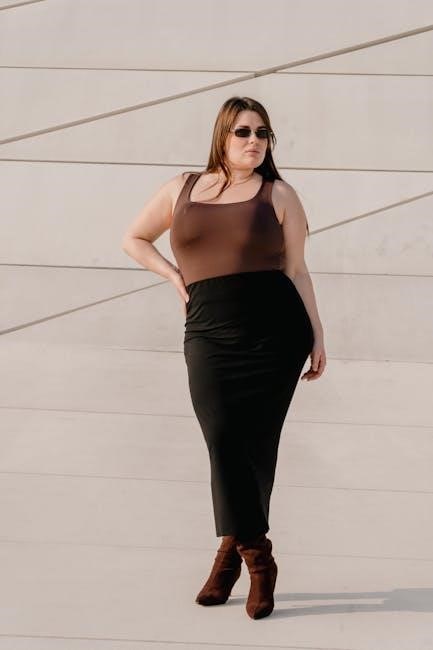
Understanding that feet often differ in size, it’s crucial to measure both feet and fit boots to the larger one. The toe box should allow ample wiggle room, preventing pressure and discomfort. Heel hold is equally important, ensuring minimal slippage during movement. Considering foot volume – the overall thickness of your foot – helps determine the appropriate boot height and width. A well-fitting boot accommodates your foot’s anatomy, promoting comfort and preventing injuries.
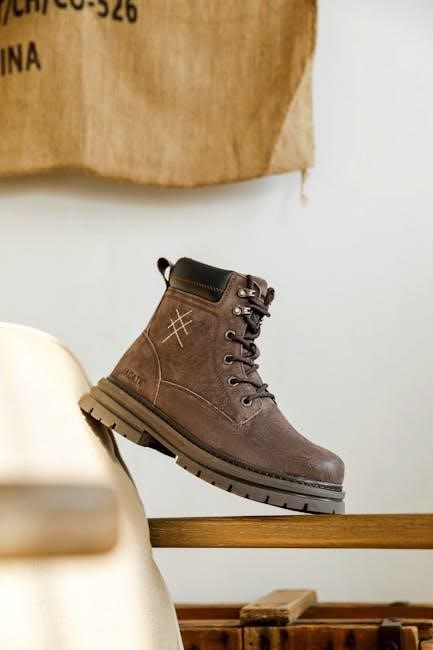
Measuring Your Feet for Boots
Accurate foot measurements are the foundation of finding the perfect boot fit, ensuring comfort and preventing issues like blisters or discomfort during wear.
Tools You’ll Need for Accurate Measurement
To begin the process of determining your ideal boot size, gathering the right tools is essential for precision. A simple ruler or measuring tape will suffice for measuring foot length, ensuring it has both inch and centimeter markings for versatility. For width measurements, a flexible measuring tape is preferable, allowing it to conform to the shape of your foot.
Beyond these basic tools, a piece of paper larger than your foot is needed to trace its outline, providing a visual reference for accurate measurements. A pen or pencil is crucial for tracing, and a sock of the thickness you’d typically wear with boots should be worn during the measurement process to account for added volume. Finally, having a friend assist can be incredibly helpful, especially when tracing and ensuring the measuring tape remains snug but not overly tight.

How to Measure Foot Length
Start by placing a piece of paper on a flat surface against a wall. Wearing the socks you’d typically wear with boots, stand with your heel firmly against the wall. Trace the outline of your foot carefully, ensuring the pen or pencil is held vertically. Repeat this process for the other foot, as sizes can vary slightly.
Next, using a ruler or measuring tape, measure the distance from the back of the heel tracing to the tip of the longest toe. This measurement represents your foot length. It’s crucial to measure both feet and use the larger measurement when determining your boot size. Note this length in both inches and centimeters for compatibility with various size charts. Accurate length measurement is the foundation of finding the right fit!
How to Measure Foot Width
After determining your foot length, measuring width is equally important for a comfortable boot fit. With your foot still traced on the paper, find the widest part of your foot within the tracing. Use a ruler to measure the distance across this widest point, ensuring the ruler is straight and perpendicular to the length measurement.
Record this measurement in inches. Foot width is often categorized using letters like D (standard), 2E (wide), and 4E (extra wide). Knowing your width helps you select boots that won’t pinch or feel too loose. Consider that width can vary between manufacturers, so referencing specific brand charts is advisable. Don’t underestimate the impact of width on overall comfort!

Boot Size Charts: A Comprehensive Overview
Boot size charts differ between men, women, and children, and understanding these variations is key to finding the perfect, comfortable fit for everyone.
Men’s Boot Size Charts
Men’s boot sizing typically begins at size 6 and extends to size 16, though availability can vary by brand and boot style. Standard US sizing is the most common, but it’s vital to consult specific brand charts. These charts correlate US sizes with UK and EU equivalents, accounting for subtle differences in manufacturing.
Generally, a US size 9 equates to a UK size 8 and a European size 42. However, half sizes are crucial for a precise fit; don’t assume a whole size will suffice. Many manufacturers provide printable foot measurement guides on their websites, allowing for accurate length determination. Remember that width also plays a significant role, and men’s boots are commonly available in widths ranging from narrow (2A) to extra-wide (4E).
Always prioritize measuring both feet, as slight variations are common, and fit the boot to the larger foot. Consider the intended use of the boot – work boots may require extra toe room, while hiking boots benefit from a snug, secure fit.
Women’s Boot Size Charts
Women’s boot sizes generally range from size 5 to size 12, although, like men’s sizing, this can fluctuate depending on the brand and boot type. A key difference is that women’s sizing often incorporates a wider range of width options to accommodate varying foot shapes. Standard US sizing is prevalent, but conversion charts to UK and EU sizes are essential for international purchases.
Typically, a US women’s size 8 corresponds to a UK size 6 and a European size 39. However, half sizes are critical for achieving a comfortable and secure fit; Many brands offer specific sizing guides tailored to their footwear, including detailed foot measurement instructions.
Women often have narrower feet than men, so width designations like B (medium), D (wide), and EE (extra-wide) are crucial considerations. Always measure both feet and fit the boot to the larger foot, accounting for sock thickness and intended boot usage.
Kids’ Boot Size Charts
Children’s feet grow rapidly, making accurate sizing essential for comfort and healthy development. Kids’ boot sizes are typically categorized by age and foot length, often using infant, toddler, and youth designations. Unlike adult sizing, kids’ sizes don’t always follow a consistent conversion between brands, necessitating careful measurement.
Infant sizes usually range from 1 to 6, toddler sizes from 7 to 10, and youth sizes from 11 onwards. It’s recommended to measure a child’s feet every few months, as growth spurts can quickly alter their size. Allow for approximately half an inch of growing room within the boot.
Width is also important for children’s boots, with options like narrow, medium, and wide available. Prioritize a secure heel fit and sufficient toe room to prevent discomfort and blisters. Regularly check for signs of tightness or pressure while the child is wearing the boots.

Converting Between Boot Size Systems
Boot sizes vary internationally; understanding US to UK, US to EU, and UK to EU conversions is vital for accurate online purchases and fit.
US to UK Boot Size Conversion
Converting from US to UK boot sizes isn’t always straightforward, as slight variations can occur between manufacturers. However, a general rule of thumb provides a reliable starting point for finding your correct UK size. Typically, you’ll subtract 0.5 to 1 from your US men’s size to get the equivalent UK size. For example, a US men’s size 9 would generally translate to a UK size 8.5 or 9.
For women’s sizes, the conversion is a bit different. Add 0.5 to 1.5 to your US women’s size to approximate the UK equivalent. A US women’s size 7 would likely be a UK size 7.5 or 8. It’s always best to consult a specific brand’s size chart when available, as discrepancies can exist. Remember to consider boot type, as work boots might fit differently than fashion boots.
US to EU Boot Size Conversion
Translating US boot sizes to the European (EU) system requires understanding a more complex relationship, as EU sizing tends to be more precise. Generally, you’ll add 31 to your US men’s size to arrive at the approximate EU size. For instance, a US men’s size 9 would equate to an EU size 42. However, this is a generalization, and variations exist.
For women’s sizes, the conversion involves adding 31.5 to 32 to the US size. A US women’s size 7 would typically correspond to an EU size 38.5 or 39. Always prioritize checking the specific brand’s size chart, as EU sizing can differ slightly. Considering the boot’s intended use – work, hiking, or casual – is also crucial for accurate fit, as styles vary.
UK to EU Boot Size Conversion
Converting UK boot sizes to the European (EU) system is relatively straightforward, but nuances exist between brands. As a general rule, you can add 35.5 to your UK men’s size to obtain the approximate EU equivalent. For example, a UK men’s size 8 would translate to an EU size 43.5. However, it’s vital to remember that half sizes in the UK don’t always directly correlate to half sizes in the EU.
For women’s sizes, adding 34.5 to 35 to the UK size usually provides a good estimate. A UK women’s size 5 would typically be around an EU size 39.5 or 40. Always consult the specific brand’s size chart for the most accurate conversion, as discrepancies can occur. Considering the boot’s purpose – whether for fashion, work, or outdoor activities – is also important for optimal fit.
Boot Widths: Finding the Right Fit
Beyond length, boot width significantly impacts comfort; understanding designations like D, 2E, and 4E is key to avoiding pinching or excessive movement.
Understanding Boot Width Designations (e.g., D, 2E, 4E)
Boot width is often indicated by letters following the size number, representing varying degrees of spaciousness. The standard width for men’s boots is typically designated as ‘D’. However, this doesn’t suit everyone! For those with wider feet, options like ‘2E’ (extra wide) and ‘4E’ (extra-extra wide) are available, providing increased room in the forefoot area.
Women’s boot widths follow a similar system, though the starting point differs. ‘B’ is generally considered the standard width for women, with ‘2E’ offering a wider fit. It’s crucial to remember that width designations can vary slightly between manufacturers, so checking specific brand charts is always recommended. Ignoring width can lead to discomfort, blisters, and even long-term foot problems, so prioritize a proper fit!
How Foot Width Impacts Boot Comfort
Foot width significantly influences boot comfort and overall foot health. A boot that’s too narrow will constrict the foot, leading to pinching, blisters, and potentially even nerve damage over time. Conversely, a boot that’s too wide can cause excessive movement within the boot, resulting in instability and reduced support during activities.
Proper width ensures even pressure distribution across the foot, minimizing stress points and maximizing comfort. Individuals with wider feet often experience discomfort in standard-width boots, while those with narrower feet may find wider boots feel sloppy. Identifying your correct width is as important as finding the right length, contributing to a secure, comfortable, and enjoyable experience with your boots.

Specific Boot Types & Sizing Considerations
Different boot styles—work, hiking, winter, and motorcycle—require unique sizing approaches due to their intended use and construction features.
Work Boot Sizing
Work boots demand a precise fit, prioritizing safety and all-day comfort on demanding job sites. Unlike casual footwear, work boots often require extra toe room to accommodate sock thickness and foot swelling throughout the day.
Steel-toe or composite-toe boots necessitate at least a half-size larger than your standard shoe size to prevent painful toe compression; Consider the boot’s construction; heavier boots may feel snugger initially, requiring a slightly larger size;
Always measure your feet while wearing the type of socks you’d typically wear on the job. Pay attention to width, as work boots often come in various widths (D, EE, EEE) to accommodate different foot shapes. Prioritize a snug heel fit to prevent slippage and blisters, ensuring stability during strenuous activities.
Hiking Boot Sizing
Hiking boots require a unique sizing approach, balancing comfort with performance on varied terrain. A snug, secure fit is paramount to prevent blisters and ensure stability, especially during descents. Unlike everyday shoes, hiking boots should allow for some toe room – approximately a thumb’s width – to accommodate foot swelling during long hikes.
Consider sock thickness when measuring; wear the hiking socks you intend to use. It’s best to measure your feet later in the day when they are naturally more swollen. Pay close attention to heel hold; minimal slippage is crucial to prevent blisters.
Different hiking boot types (lightweight, backpacking, mountaineering) may require slightly different fits. Backpacking boots, designed for heavier loads, often benefit from a slightly more generous fit.
Winter Boot Sizing
Winter boots demand extra space to accommodate thick socks and thermal insoles, essential for maintaining warmth in frigid conditions. Prioritize a roomy toe box; constricted toes impede circulation, leading to cold feet. Unlike hiking boots, a slightly looser fit is often preferable, allowing for air circulation and preventing pressure points.
When measuring for winter boots, wear the thickest socks you plan to use. Account for potential foot swelling due to prolonged exposure to cold. Consider the boot’s insulation level; more insulation may necessitate a slightly larger size.
Waterproof winter boots often have a stiffer construction, potentially requiring a half-size increase for optimal comfort. Ensure adequate ankle support to prevent injuries on icy surfaces.
Motorcycle Boot Sizing
Motorcycle boots require a precise fit, prioritizing both protection and control. A snug fit is crucial to prevent foot movement within the boot during a crash or sudden maneuver. Unlike casual boots, motorcycle boots often have reinforced ankle and shin protection, impacting the overall fit.
When trying on motorcycle boots, wear the socks you’ll use while riding. Ensure sufficient toe room, but avoid excessive space that could compromise shifter and brake control. Pay attention to the boot’s stiffness; break-in time may be required for optimal comfort.
Consider the type of riding you’ll be doing. Touring boots often prioritize comfort, while racing boots emphasize protection and a tighter fit.

Tips for Online Boot Shopping
Always prioritize retailers with generous return policies and thoroughly read customer reviews specifically mentioning sizing experiences before making your online boot purchase.
Checking Return Policies
Before finalizing any online boot purchase, meticulously examine the retailer’s return policy. A flexible and accommodating return policy is absolutely essential, given the inherent challenges of accurately determining boot fit without trying them on in person. Look for policies that allow for free returns, extended return windows (beyond the standard 30 days is preferable), and clear instructions on the return process.
Understand whether you’re responsible for return shipping costs, and if the original shipping fees are refundable. Some retailers may offer store credit only, while others provide a full refund to your original payment method; A generous return policy minimizes the risk associated with online boot shopping, allowing you to confidently experiment with different sizes and styles until you find the perfect fit. Don’t hesitate to contact customer service if the policy is unclear or has ambiguous terms.
Reading Customer Reviews Regarding Sizing
Customer reviews can be an invaluable resource when gauging the accuracy of a boot’s sizing. Pay close attention to comments specifically addressing whether the boots run true to size, large, or small. Look for patterns – if multiple reviewers consistently mention the same sizing issue, it’s a strong indicator to consider ordering a different size than your usual.
Filter reviews by verified purchasers to ensure authenticity. Note reviewers’ foot shape and width, as this can provide context. For example, someone with wide feet might find a boot runs narrow, even if it’s generally considered true to size. Search for keywords like “sizing,” “fit,” “width,” and “narrow” within the reviews. Don’t rely solely on star ratings; delve into the written feedback for detailed insights into the boot’s fit and comfort.

Dealing with Common Boot Fit Issues
Addressing fit problems is essential for comfort; solutions range from using thicker socks for tightness to adding insoles for looseness, ensuring optimal wear.
Boots Too Tight
Experiencing constricted boots can lead to discomfort and even foot problems, so addressing this issue promptly is vital. Initially, try wearing thinner socks to create more space within the boot. If that doesn’t suffice, consider using a boot stretcher, a tool designed to gently expand the leather or material.
Focus stretching on areas causing the most pressure, like the toe box or width. For persistent tightness, professional cobblers offer stretching services, providing a more customized and effective solution. Avoid forcing your feet into boots that are significantly too small, as this can cause blisters, bunions, or nerve damage.
Remember that some materials, like leather, will naturally stretch with wear, but this process takes time. If the boots remain uncomfortably tight after attempting these methods, exchanging them for a larger size is the most sensible option.
Boots Too Loose
Dealing with boots that are too spacious can compromise stability and lead to blisters from excessive foot movement. The simplest solution is to wear thicker socks – wool or cushioned varieties can effectively fill extra volume. Alternatively, consider using boot inserts or insoles; these not only take up space but also provide added arch support and cushioning.
For a more secure fit, explore tongue pads, which fill the gap between the top of your foot and the boot’s tongue, reducing heel lift. If the looseness is concentrated in the heel, heel grips can help prevent slippage.
However, if the boots are significantly too large, even with these adjustments, exchanging them for a smaller size is recommended to ensure optimal comfort and performance.